
Ever found yourself staring at a heavy air conditioning unit, wondering how on earth you’ll get it to the third floor? Or perhaps you’ve got a stunning glass panel that needs installing in a tight courtyard space? Maybe you’re renovating your home and that gorgeous marble benchtop isn’t going to lift itself?
These situations pop up more often than you’d think across Australia. From Melbourne’s heritage buildings to Sydney’s compact apartment complexes, there’s a growing need for lifting solutions that don’t require shutting down an entire street. That’s where mini crane hire comes into play. These compact powerhouses have been quietly revolutionising how Australians tackle small-scale and indoor projects, offering a practical alternative to their hulking traditional cousins.
In this guide, we’ll explore everything you need to know about mini crane hire. You’ll discover what makes these machines so effective, the types of projects they’re best suited for, and how to choose the right mini crane hire solution for your needs. We’ll also break down costs, safety considerations, and what to expect when booking your first mini crane hire service. Whether you’re a tradie, a small business owner, or a homeowner planning a renovation, this guide will help you make a confident and informed decision.
What Is a Mini Crane and How Does It Work?
Key Features That Set Mini Cranes Apart
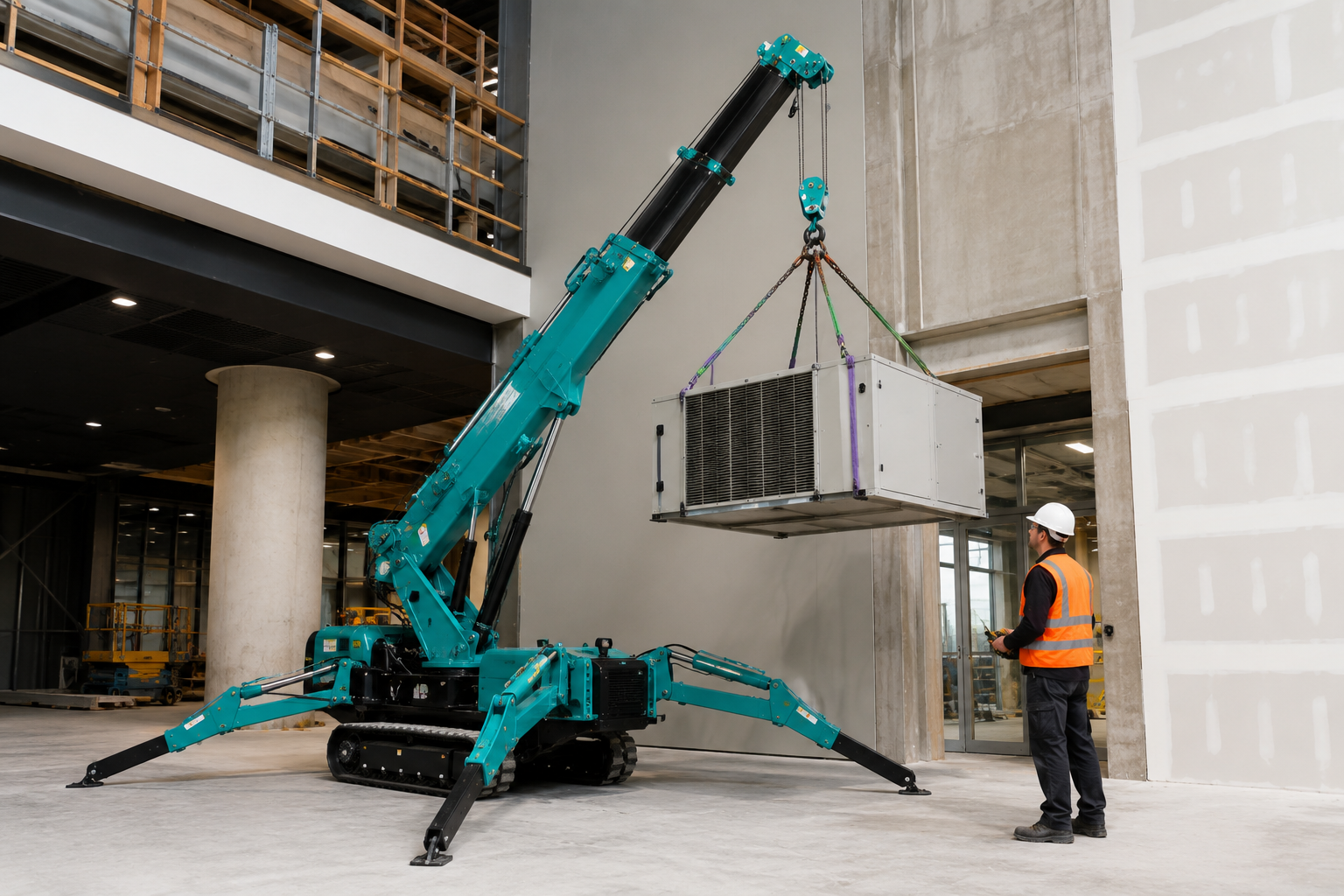
Mini cranes, also called spider cranes or compact cranes, are exactly what they sound like—smaller, more agile versions of traditional cranes. They typically feature four extendable legs (hence the “spider” nickname) that provide stability while keeping the machine’s footprint surprisingly small. Most models run on electric power or have dual power options, making them ideal for indoor work where diesel fumes simply aren’t an option.
What makes them genuinely impressive is their ability to pack serious lifting power into a compact frame. Despite their size, many mini cranes can lift several tonnes while fitting through standard doorways. They’re designed with manoeuvrability in mind, featuring tracks or wheels that allow them to navigate tight corners and even travel across sensitive flooring without causing damage.
Types of Mini Cranes Available for Hire
The Australian hire market offers several mini crane varieties to suit different project requirements. Spider cranes remain the most popular choice, ranging from ultra-compact 1-tonne models to beefier 6-tonne machines. You’ll also find pick-and-carry mini cranes, which can move loads while carrying them—perfect for repositioning heavy items across a site. Some hire companies stock specialised glass-handling cranes with vacuum attachments designed specifically for facade work.
Why Choose Mini Crane Hire Over Traditional Cranes?
Cost-Effectiveness for Smaller Budgets
Let’s talk money. Hiring a traditional crane often means paying for capacity you simply don’t need. Plus, there are the additional costs of road closures, permits, and the extended setup time required. Mini cranes slash these expenses dramatically. Their quick setup means you’re paying for productive lifting time, not hours of preparation. For many small projects, the savings can be substantial—often 40-60% less than traditional crane hire.
Access to Tight and Confined Spaces
Here’s where mini cranes truly shine. Traditional cranes need significant space for outriggers, counterweights, and boom swing. Mini cranes? They can squeeze into courtyards, navigate through shopping centres, and even travel inside buildings. Some models are narrow enough to fit through single doorways and light enough to operate on upper floors. This opens up possibilities that would be completely impractical—or impossible—with conventional equipment.
Reduced Site Disruption and Noise
Nobody wants to be *that* neighbour with the deafening construction site. Mini cranes operate significantly quieter than their larger counterparts, especially electric models that hum along without the constant diesel rumble. They also cause minimal disruption to surrounding businesses and residents, making them the go-to choice for projects in busy commercial areas or residential neighbourhoods where maintaining good relations matters.
What Are Mini Cranes Used For?
Indoor Lifting and Installation Projects
Shopping centre fit-outs, museum installations, warehouse shelving systems—these indoor projects would be nightmares without mini cranes. Electric models produce zero emissions, making them safe for enclosed spaces. They can position heavy equipment precisely where needed, whether that’s installing a commercial kitchen exhaust system or placing machinery in a factory.
Residential Construction and Renovations
Home renovations increasingly involve heavy materials that simply can’t be manhandled. Stone benchtops, steel beams, spas, and even modular bathroom pods all benefit from mini crane assistance. The compact size means these machines can work in backyards, navigate side access passages, and operate in spaces where traditional cranes couldn’t dream of reaching.
Glass and Facade Installation
Modern Australian architecture loves glass—big, beautiful, and incredibly heavy glass. Mini cranes equipped with vacuum lifters have become essential tools for glaziers and facade installers. They allow precise positioning of glass panels weighing hundreds of kilograms while protecting both the material and installers.
HVAC and Mechanical Equipment Placement
Getting air conditioning units onto rooftops or into plant rooms presents real challenges. Mini cranes handle this brilliantly, lifting compressors, chillers, and ducting components into position with precision. Their ability to work in restricted rooftop spaces makes them invaluable for HVAC contractors across Australia.
Is Mini Crane Hire Suitable for DIY or Small Business Projects?
When to Hire a Mini Crane with an Operator
For most applications, choosing mini crane hire with an experienced operator is the smartest option. These professionals understand load calculations, setup procedures, and safety requirements inside out. They can also identify potential problems before they turn into costly mistakes on-site. Most Australian mini crane hire companies provide wet hire services (with an operator) as the standard option, ensuring safer and more efficient lifting operations.
Safety Considerations for First-Time Hirers
Even when you’ve got a skilled operator, there are responsibilities you need to handle. Ensure the site is prepared and accessible, confirm ground conditions can support the crane’s weight, and keep unnecessary personnel clear of the working area. Your hire company should provide a thorough briefing on what’s required.
How to Choose the Right Mini Crane Hire Company
Questions to Ask Before Booking
Ask about their fleet—do they have the right size crane for your project? Check operator qualifications and insurance coverage. Request references from similar jobs. Clarify what’s included in the quoted price and what might incur additional charges. A reputable company will answer these questions openly and honestly.
What to Expect on Delivery Day
Your crane should arrive at the agreed time with a fully qualified operator. They’ll conduct a site assessment, set up safely, and discuss the lift plan with you before beginning work. Good operators communicate clearly throughout the job and leave the site tidy when finished.
Is Mini Crane Hire Right for Your Next Project?
So there you have it—a complete rundown of why mini crane hire has become such a popular choice across Australia. From inner-city renovations to regional construction sites, these versatile machines are solving lifting challenges that once seemed impossible. They’re cost-effective, surprisingly powerful, and capable of accessing spaces that leave traditional cranes scratching their booms.
The key takeaway? Don’t assume a lifting challenge requires a massive crane or expensive rigging solutions. Mini cranes fill that crucial gap between what you can lift manually and what needs serious heavy equipment. They’re particularly brilliant for indoor work, residential projects, and anywhere access is tight.
If you’ve got a project involving heavy lifting in a restricted space, mini crane hire is absolutely worth exploring. Have a chat with a reputable hire company, describe your specific needs, and you might be surprised at how straightforward—and affordable—the solution can be. Your back will thank you for it!