
Are you thinking about getting air conditioning installed in your Melbourne home? Wondering whether to tackle it yourself or call in the professionals? And how do you even know which system is right for your space?
If you’ve found yourself asking these questions, you’re definitely not alone. Installing a new air conditioning unit is one of those projects that seems straightforward on the surface but quickly reveals its complexity once you start digging in. From understanding split system electrical requirements to choosing the perfect spot for your outdoor unit, there’s quite a bit to consider before you feel that first blast of cool air.
In this guide, we’re going to walk you through everything you need to know about air conditioning installation in Melbourne. You’ll discover how to assess your home’s cooling needs, what to expect on installation day, and the common mistakes that trip up even well-meaning homeowners. Whether you’re curious about how to install an air conditioner yourself or simply want to know what questions to ask your installer, we’ve got you covered. Let’s get stuck into it.
Before You Begin: Essential Pre-Installation Considerations
Assessing Your Home’s Cooling Needs
Before you even look at systems, you need to understand what you’re working with. Room size, ceiling height, insulation quality, and window placement all affect how much cooling power you’ll need. A unit that’s too small will struggle constantly, while one that’s too big will cycle on and off inefficiently.
Consider which rooms you actually want to cool. Do you need whole-home comfort, or are you primarily focused on living areas and bedrooms? This decision impacts whether you’re looking at a split system or central AC unit installation.
Choosing the Right System: Split System vs Central AC Unit Installation
Split systems are brilliant for cooling specific rooms or zones. They’re generally more affordable upfront and easier to install. Central AC unit installation, on the other hand, cools your entire home through ductwork and is ideal for larger properties.
For most Melbourne homes, split systems offer the best balance of performance and value. However, if you’re building new or renovating extensively, central air might make more sense long-term.
Understanding Split System Electrical Requirements
Here’s where things get technical. Split system electrical requirements aren’t something to take lightly. Most units need a dedicated circuit, and larger systems may require three-phase power. Your existing electrical setup might need upgrading to handle the load safely.
This is precisely why a qualified electrician should assess your home before installation. Getting the electrics wrong isn’t just inconvenient—it’s genuinely dangerous.
Setting a Realistic Budget
Quality air con unit installation isn’t cheap, but it’s absolutely worth the investment. Factor in the unit cost, installation labour, any electrical upgrades, and potential building modifications. Don’t forget ongoing running costs either—an energy-efficient unit might cost more initially but saves money over time.
How to Install an Air Conditioner: Understanding Your Options
Can You Install an Aircon Yourself in Australia?
So, how to install aircon yourself? Here’s the honest truth: legally, you can’t handle the complete installation. Australian regulations require licensed professionals to handle refrigerant gases and electrical connections. These aren’t arbitrary rules—they exist because refrigerants are environmentally harmful and electrical work is dangerous.
What you *can* do is prepare your home, position the mounting bracket, and perhaps drill some holes. But the critical work? That’s for the professionals.
Why Professional Installation is Worth the Investment
Beyond legal requirements, professional installation simply works better. Experienced installers understand airflow dynamics, optimal positioning, and how to install AC unit systems so they run efficiently for years.
A botched DIY job might seem like a money-saver, but it often leads to higher running costs, reduced lifespan, and voided warranties. Plus, you’ll likely need a professional to fix your mistakes anyway.
What Qualifications Should Your Installer Have?
When installing HVAC systems, your technician needs specific credentials. Look for an Australian Refrigeration Council (ARC) licence, which authorises them to handle refrigerants. They should also have appropriate electrical licences for your state.
Don’t be shy about asking for credentials. Reputable installers expect these questions and happily provide proof.
The Complete Air Con Unit Installation Checklist
Site Inspection and Measurement
Any decent installer starts with a thorough site inspection. They’ll measure rooms, check existing electrical infrastructure, and assess structural considerations. This isn’t something to rush—proper measurement prevents headaches later.
Selecting the Optimal Indoor Unit Location
Your indoor unit needs careful positioning. It should be mounted high enough to circulate air effectively but accessible for maintenance. Avoid spots directly above beds or workspaces where the airflow might feel uncomfortable.
Consider aesthetics too. While function matters most, you don’t want an eyesore dominating your living room.
Positioning the Outdoor Unit Correctly
The outdoor unit needs adequate ventilation and protection from direct sunlight. It should sit on a stable, level surface and have clearance around all sides. Noise is another consideration—place it away from bedroom windows and neighbouring properties where possible.
Preparing Your Home for Installation Day
Clear the installation area of furniture and valuables. Make sure the installer has easy access to both indoor and outdoor locations. If you have pets, consider keeping them secure elsewhere during the work.
What Happens During the Installation Process?
Step-by-Step: How to Install AC Unit Professionally
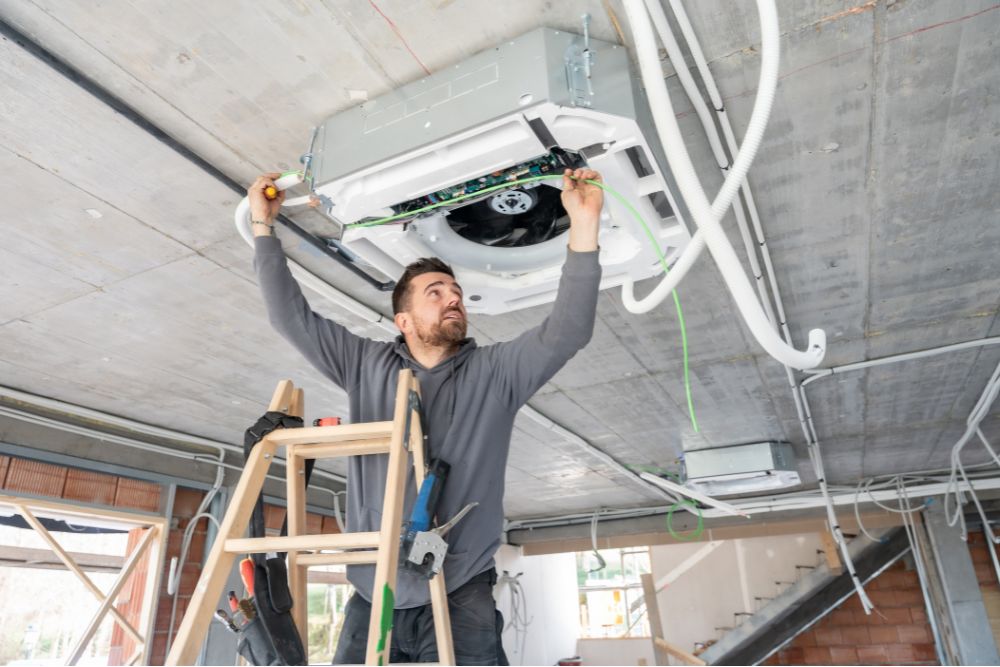
Professional installation follows a systematic process. First, the installer mounts the indoor unit bracket and drills through the wall for pipework. Next, they position and secure the outdoor unit.
The refrigerant lines, drainage pipes, and electrical cables then connect the two units. Finally, the system gets vacuumed to remove moisture and air before refrigerant charging.
Installing HVAC Systems: What to Expect on the Day
Expect some noise and minor disruption. The installer will need power and water access. There’ll be drilling, possibly some cutting, and plenty of coming and going between indoor and outdoor areas.
Good installers work tidily, but some mess is inevitable. Protect floors and furniture accordingly.
How Long Does It Take to Install a New Air Conditioner?
A straightforward split system installation typically takes 4-8 hours. More complex jobs—multiple units, difficult access, or electrical upgrades—can extend to a full day or more.
Central AC unit installation naturally takes longer, sometimes several days depending on ductwork requirements.
Install New Air Conditioning Unit: Post-Installation Essentials
Testing and Commissioning Your New System
Before the installer leaves, they should thoroughly test your new system. This includes checking all modes, verifying temperatures, and confirming proper drainage. They’ll also demonstrate controls and explain basic operation.
Understanding Your Warranty and Documentation
Keep all paperwork safe. You’ll receive manufacturer warranties (typically 5-10 years) and installer warranties covering workmanship. Understand what’s covered and what voids coverage—often, DIY repairs or missed servicing can invalidate warranties.
First-Use Tips for Optimal Performance
Start with moderate temperature settings rather than cranking the system to extremes. Let it run for a few hours initially to settle in. Check for any unusual noises or smells and report them immediately.
Common Installation Mistakes to Avoid
Sizing Errors and Their Consequences
Undersized units work overtime, wear out faster, and struggle on hot days. Oversized units cycle frequently, waste energy, and fail to properly dehumidify. Getting sizing right from the start saves money and frustration.
Poor Placement Decisions
Installing units in poorly ventilated spaces, direct sunlight, or awkward locations creates ongoing problems. Always prioritise function over convenience when choosing positions.
Cutting Corners on Electrical Requirements
Ignoring split system electrical requirements invites trouble. Overloaded circuits cause tripping, potential fire hazards, and damage to your new system. Never compromise on electrical safety.
Maintaining Your Newly Installed Air Conditioning Unit
Regular maintenance keeps your system running efficiently. Clean filters monthly during heavy use periods. Schedule professional servicing annually to check refrigerant levels, electrical connections, and overall performance.
Address small issues promptly before they become expensive problems. A well-maintained system can last 15-20 years with proper care.
Your Path to a Hassle-Free Installation
Installing new air conditioning unit systems doesn’t have to be stressful. With proper planning, the right professionals, and realistic expectations, you’ll be enjoying comfortable temperatures in no time.
The key takeaway? Don’t cut corners. Invest in quality equipment, hire qualified installers, and follow through with regular maintenance. Your future self—especially during those sweltering Melbourne summers—will thank you.
Ready to get started? Find a reputable local installer, get multiple quotes, and ask plenty of questions. Your perfect climate-controlled home is just an installation away.