
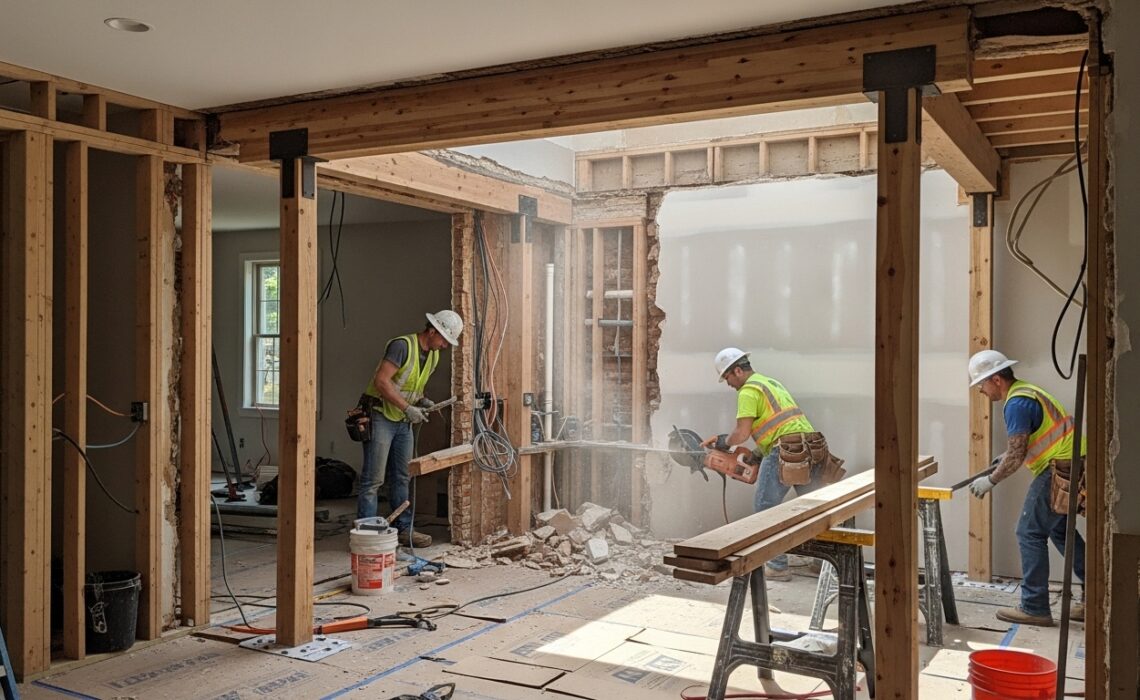
Removing a wall to open up living space can transform a home making rooms brighter, improving flow, and adding value. But when that wall is structural, proper Load Bearing Wall Removal planning is essential to keep your building safe and compliant. This guide walks you through everything homeowners in Melbourne, Victoria, Australia need to know about changing load bearing walls in residential buildings, with clear explanations, local insights, and practical steps to follow.
If you are planning a safe load-bearing wall removal in your home, this content will help you understand the engineering side of the process, local building rules, common challenges, and how to manage them without surprises.
What Is a Load Bearing Wall and Why It Matters?
Understanding Walls in Your Home
Simply put, a load bearing wall supports weight from the structure above from floors, roofs, and sometimes chimneys or other structural elements. Unlike partition walls, which only divide space, load bearing walls carry vertical loads that are crucial to your home’s structural integrity.
Removing these walls without proper planning and support can lead to:
- Sagging ceilings and floors
- Cracks in walls or plaster
- Uneven settling of the structure
- In severe cases, partial collapse
Because of these risks, Load Bearing Wall Removal should always follow careful engineering design and local building rules.
Why Careful Planning Matters
Before any wall is removed, you need to understand what the wall does, what’s above it, and how loads will be carried afterward. This is where structural engineering and compliance with local building standards play a key role.
A well‑planned load bearing wall removal will:
- Protect the safety of the home and its occupants
- Maintain overall building strength
- Meet Melbourne and Victorian building regulations
- Avoid costly repairs down the track
How Load Bearing Wall Removal Works
Step 1: Initial Assessment
Before doing any demolition, a qualified building inspector or structural engineer will:
- Inspect the wall in your home
- Look at the roof, floors, and other structural elements
- Confirm whether the wall is load bearing
In Victoria, many older homes especially in inner suburbs of Melbourne were built with timber framing and may have hidden load paths that are not obvious without experience.
Step 2: Structural Engineering Design
Once a load bearing wall is confirmed, a structural engineer will design:
- The type of support beam needed (steel, LVL, etc.)
- The correct size of beam and posts
- How load will transfer through the new support system
This design is critical because it ensures the building can carry loads safely after the wall is gone. Without accurate calculations, structural failure can occur.
Step 3: Building Permits and Approval
In Melbourne and Victoria, removal of load bearing walls typically requires a building permit from your local council. To get a permit, you need:
- Engineering drawings and calculations
- A cut‑out plan showing how the wall will be removed and supported
- A qualified builder or licensed tradesperson involved
Building permits help make sure that work meets the Victorian Building Code and associated Australian Standards for structural safety.
Step 4: Temporary Support During Works
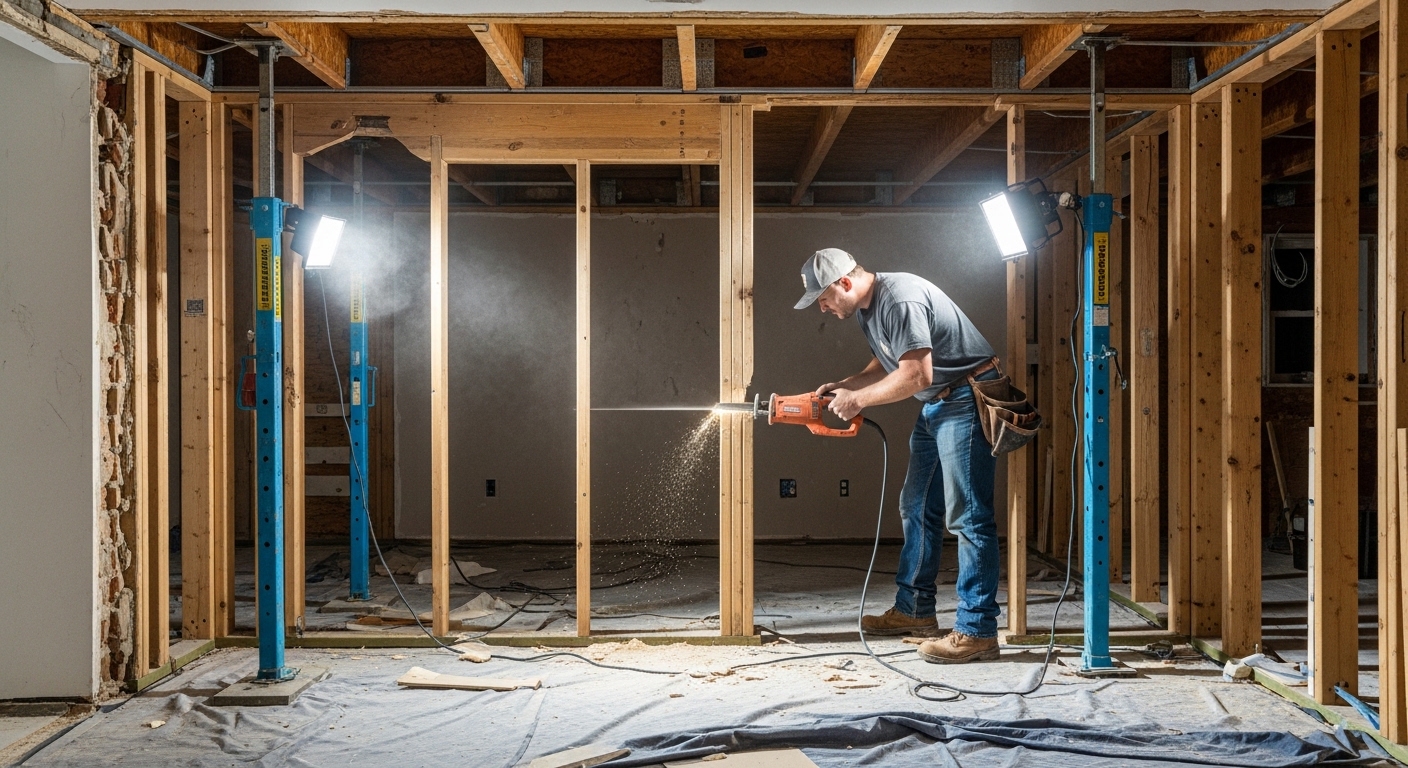
Before the wall comes out, temporary supports are installed to carry the load while the permanent beam is being put into place. These typically include:
- Acro props (adjustable steel posts)
- Temporary timber frames
- Bracing to ensure stability
Proper temporary support protects workers and prevents unintended movement in the structure.
Step 5: Installation of Permanent Support
Next, the installer will:
- Fit the engineered beam (steel or LVL)
- Pack and shim to correct levels
- Connect supports to foundations or structural footings
- Remove temporary supports once permanent support is stable
This stage requires precision even small mistakes can lead to uneven loads or deflection of the beam.
Local Regulations and Requirements in Victoria
Living in Melbourne, VIC means load bearing wall removal must comply with local standards and regulations tied to structural safety. Here’s what you should know:
Building Permits
Most structural alterations especially removal of load bearing walls require a building permit under the Victorian Building Regulations. These rules protect occupants and future owners by ensuring the work meets engineering and safety standards.
Australian Standards
Engineered designs must refer to relevant Australian Standards for structural steel, timber design, and load calculations. These standards define how loads are measured and ensure consistent safety levels across projects.
Council Inspections
After installation, council building inspectors may check:
- That the beam is installed as per the approved plans
- That supporting footings or posts are compliant
- That finishes meet regulatory requirements
Common Types of Support Systems Used
When removing a load bearing wall in a home, engineers commonly use one of the following:
Steel Beams (RSJ or Universal Beam)
- High strength and relatively slender profile
- Excellent for long spans
- Durable with proper corrosion protection
Laminated Veneer Lumber (LVL)
- Engineered timber with consistent strength
- Often used where timber aesthetic is preferred
- Good for moderate spans
Portal Frames
- Used for larger openings
- Transfers load to sidewalls
- Often needed in wide‑span renovations
Each option has its own pros and cons depending on span, load, and architectural requirements.
Risks and How to Avoid Them
Failing to properly plan or engineer a load bearing wall removal can lead to:
- Sagging ceilings or floors
- Cracks in internal walls or plaster
- Misaligned door frames
- Structural failure
To avoid these risks:
- Always confirm a wall’s status before removing it
- Use qualified engineers and licensed builders
- Obtain a building permit and follow approved plans
- Do not improvise with incorrect or under‑sized beams
Questions and Answers: Common Questions About Load Bearing Wall Removal in Melbourne, VIC
Q: How can I tell if a wall is load bearing?
A: A structural engineer or qualified building inspector can confirm this by looking at roof and floor framing. Walls directly under beams or aligned with other load paths are often load bearing.
Q: Do I need a permit to remove a load bearing wall in Victoria?
A: Yes. In most cases, city councils in Victoria require a building permit for structural changes, including load bearing wall removal.
Q: Can I remove a load bearing wall myself?
A: No. Because load bearing walls support structural loads, removal without proper design and temporary support can be unsafe. Always use qualified professionals.
Conclusion: Your Path to a Successful Load Bearing Wall Removal in Australia
Removing a load bearing wall can bring major improvements to your home from open living spaces to increased natural light and modern design flexibility. But success depends on thoughtful planning, sound structural engineering, and compliance with local building procedures in Melbourne and Victoria.